Aurorae on the way?
Solar eruptions could spark auroral displays visible this week from the United States and Canada.
Jeremy McGovern
On September 8, active region 10808 on the Sun produced both M-class and X-class solar flares within a few hours of each other. The Transition Region and Coronal Explorer satellite captured this image, which shows the dramatic energy released during those flares. View a movie of this activity near the bottom of this page. J. Cirtain (CfA) / NASA [View Larger Image] |
| September 13, 2005
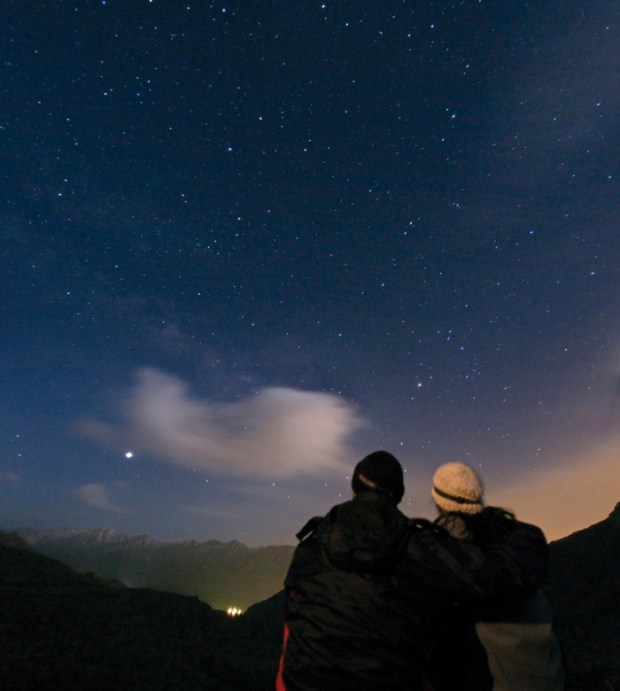
Observers in North America could be treated to sporadic, yet dazzling, sky shows during the upcoming few nights. Astronomers predict aurorae could shine in northern latitudes, hanging red and green curtains across the sky. "This evening [September 12], there is about a 70-percent chance of medium-strength aurorae at our Boston latitude," says Jonathan Cirtain of the Harvard-Smithsonian Center for Astrophysics. "Aurorae could reach even farther south." |
Eruptions from Sunspot 808 could generate mid-September 2005 auroral displays seen from northern latitudes. John McConnell [View Larger Image] Using the Transition Region and Coronal Explorer (TRACE) satellite, Cirtain's team witnessed unusual energetic activity in this sunspot region. "In one case, we recorded 5 separate flares over the course of 6 hours. That's very unusual." This activity could continue — the National Oceanic and Atmospheric Administration predicts a 75-percent chance of additional X-class flares within the next day. When this activity appeared in August with Region 10798, 798 for short, eruptions caused a few auroral displays on Earth. The area disappeared from sight as the Sun revolved. Late last week, the sunspot recurred, giving hope to aurora aficionados. (When an active sunspot reappears after one revolution, it receives a new numeral designation.) To view the potential aurorae, keep your eyes fixed north from your favorite dark-sky location. For future aurora predictions, visit our space weather section. To access this content, you will need to use a subscriber number or newsstand code. |
Active solar activity 10808 [Note: This is a large file] (File Size: 19002 KB) |
Three reasons...
To subscribe to Astronomy magazine today!
(1) Save 39%.
(2) Get full access to our online Astronomy Plus features.
(3) Receive a FREE gift.